
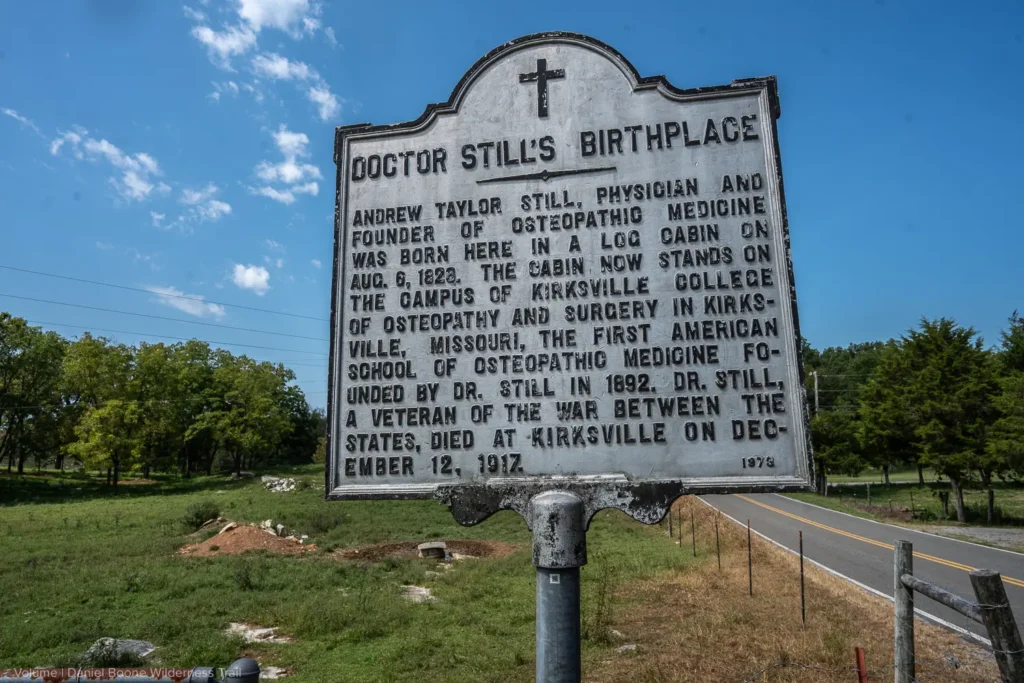
Near Dr. Still’s Birthplace
The typical emigrant making his way to Kentucky along this Trail in the time of Boone usually was of a specific background. Like Boone, himself, he was part of the greatest mass migration to have occurred in Colonial North America and in the years following the Revolution. Their forbears had come from the Border Country between Scotland and England, and who frequently had lived in Northern Ireland for a while. These Scots-Irish settled the frontier in Colonial British America, and especially so the Yadkin Valley of North Carolina. While there they heavily intermarried with the original German settlers, and with the Cherokee. In 1771 they ran afoul of the colonial authorities over issues of disenfranchisement and judicial abuse, and formed themselves into armed bands that they called “Regulators”. They fought and lost a pitched battle against the North Carolina Militia at the Battle of the Alamance, and subsequently many thousands fled for their lives to the Valleys of the Holston and Clinch, and from there – on to Kentucky. For eight hundred years they had fought for their right to exist, and after having been driven first from Britain, and then from North Carolina, they were determined to overcome all obstacles to find a home for themselves. They fell upon the Indians with a ferocity matched only by that of the Indians themselves. The bloodiest Indian wars in North America occurred here, on this frontier, and not out West.
Not all the settlers passing along this Trail fit the above mold. Many German refugees from the wars between France and Germany, called by the English Palatines, made their ways to Pennsylvania, where they then picked up the old Warrior’s Path near its beginnings, and followed it here. The poor of England also found their way here. Both of these groups had frequently paid for their passage to America by selling themselves into indentured servitude for periods varying from six to fifteen years.
Land was the economic basis of independence, and free land lay at the end of the Boone Wilderness Trail.