
LEGEND
How One Man Carved A Passage West
Daniel Boone moved through these mountains with the skill of a hunter and the vision of a settler. His trail became the gateway for thousands who followed, transforming wilderness into home and opening the frontier to a nation hungry for land.
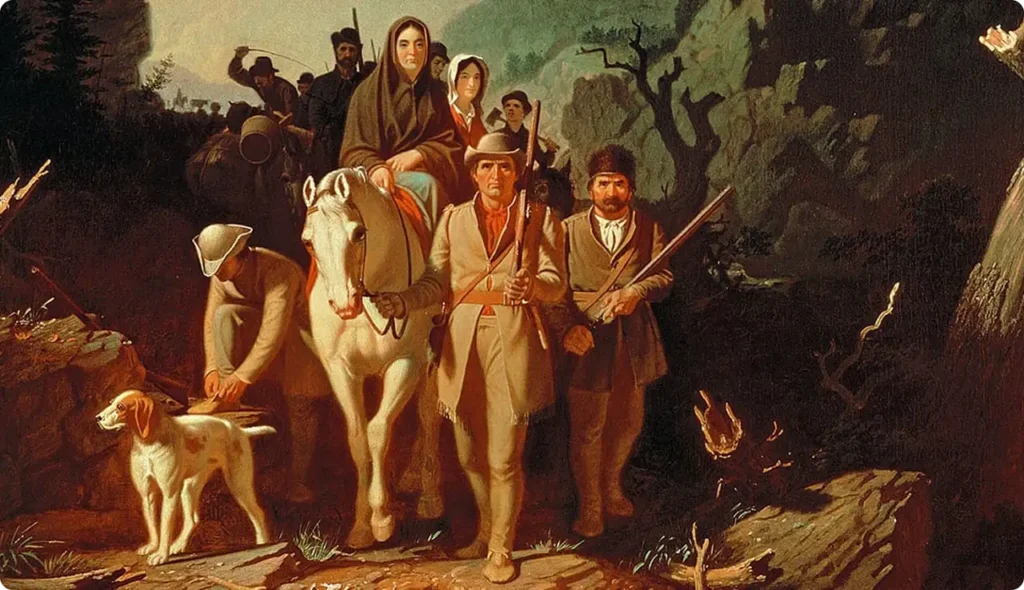
One of the nation’s most historic routes, the Daniel Boone Trail was blazed by the legendary frontiersman in 1775 from Long Island of the Holston at what is now Kingsport, TN, through the Cumberland Gap of Virginia and into Kentucky. It would become the route for hundreds of thousands of settlers of the western frontier.
JOURNEY
The Trail Through Time
Boone’s path was marked by discovery and hardship, each step a testament to the will of a man who refused to turn back. The wilderness gave way to settlement, and the frontier moved ever westward.
1540
Native Peoples and Early Exploration
Native Peoples and Early Exploration
1760
Boone Enters the Appalachian Frontier
Boone Enters the Appalachian Frontier
1773
James Boone Massacre
Daniel Boone's son James is killed during an attack on settlers attempting to enter Kentucky.
1775
Boone Reaches Cumberland Gap
Daniel Boone guides settlers through Cumberland Gap and begins blazing the Wilderness Road.
1775
Wilderness Road Opened
Wilderness Road Opened
1775
Fort Boonesborough Founded
Fort Boonesborough Founded
1788
Anderson Blockhouse Established
A fortified blockhouse is established along the Wilderness Road to aid and protect travelers.
1890
Natural Tunnel Railroad
Natural Tunnel Railroad
1961
Natural Tunnel State Park
Natural Tunnel State Park
1996
Daniel Boone Wilderness Trail Association
Daniel Boone Wilderness Trail Association
A Route That Changed America
What began as an ancient Indigenous pathway became the route that opened Kentucky and the American frontier to settlement.
Questions
Everything you need to know about the trail, its history, and visiting.
Boone marked the Wilderness Road in 1775, cutting through Cumberland Gap into Kentucky. It was a passage that changed the course of American expansion. Thousands followed where he led.
Parts of the original route remain walkable and marked for visitors. The terrain is rugged and demands respect, much as it did centuries ago. Modern trails follow the general path Boone established.
Yes, experienced guides lead groups through the trail regularly. They know the history and the land. A guide makes the journey richer and safer.
Keepers
Meet The Historians
The people who preserve and share this frontier story.
Bob McConnell
Lead Historian
Twenty years studying Boone’s journals and the settlement records of Kentucky.
Sally Kelly
Historian
Explores the path regularly and knows every ridge, stream, and landmark by heart.
Dr. Lawrence J Fleenor Jr
Historian
Maintains the collection of maps, letters, and artifacts from the frontier era.
Join our team
Help us preserve and share this important American history.
We are greatly indebted to Dr. Lawrence J. Fleenor, Jr., of Big Stone Gap, for the content of this publication.
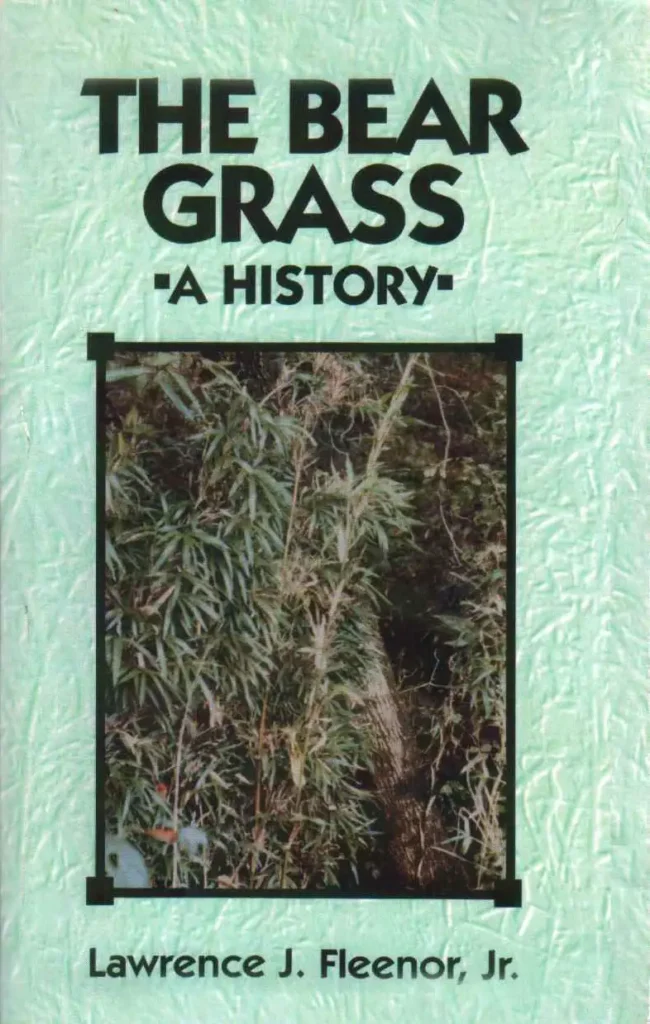
Dr. Fleenor is author of The Bear Grass, a history of Upper East Tennessee and far Southwest Virginia. His latest book is “BENGE!”, a biography of the famed Cherokee chief with photos, maps, genealogy charts and historic documents. At 199 pages and $14.95 (including tax, packaging and mailing) it may be ordered directly from Dr. Fleenor at 5532 Powell Valley Road, Big Stone Gap, Va., 24219.
Dr. Fleenor has written numerous articles on history and ethnology. A lifelong resident of the region he writes about, he has been in medical practice in Family Medicine for 30 years, and has Adjunct Faculty appointments at Mountain Empire Community College, Duke University Medical School, and the University of Virginia Medical School.
The Block House On The Holston
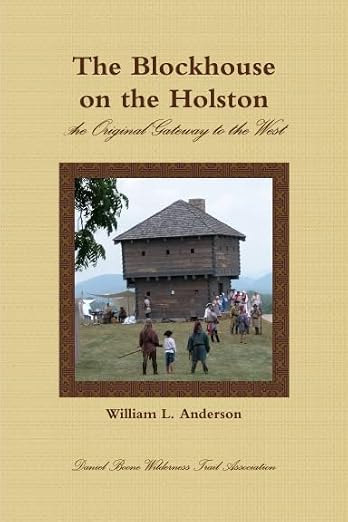
The Daniel Boone Wilderness Trail Association has published a history of the Blockhouse that was built in 1775 on the North Fork of the Holston by John Anderson. His fortified home became a landmark along the road west, the Wilderness Road, marked by Daniel Boone that same year. Over the next thirty years, some 300,000 people passed Anderson’s home on their journey through Cumberland Gap and on into what would become the state of Kentucky, and further westward.
William L. Anderson, a direct descendant of John, has written a well-researched book that tells the story, the history of the home that became known to posterity as “The Blockhouse,” and its part in the expansion westward of our new nation. The Daniel Boone Wilderness Trail Association is proud to offer this book that tells, for the first time in such detail, the very significant part played in our nation’s history by the pioneer settlers of the western frontier during the last quarter of the eighteenth century.
Also included in the book are many brief biographies of significant players in the story, maps, an article on Fort Blackmore, and the diary of early explorer Dr. Thomas Walker.
The book may be purchased for $19.95 at Natural Tunnel State Park at the Visitor’s Center and at the Wilderness Road Blockhouse Interpretive Center (276-940-2674) and at the law offices of Lisa Ann McConnell in Duffield. Or contact Robert E. McConnell at roberte@mounet.com or 276-452-4520