
Natural Bridge
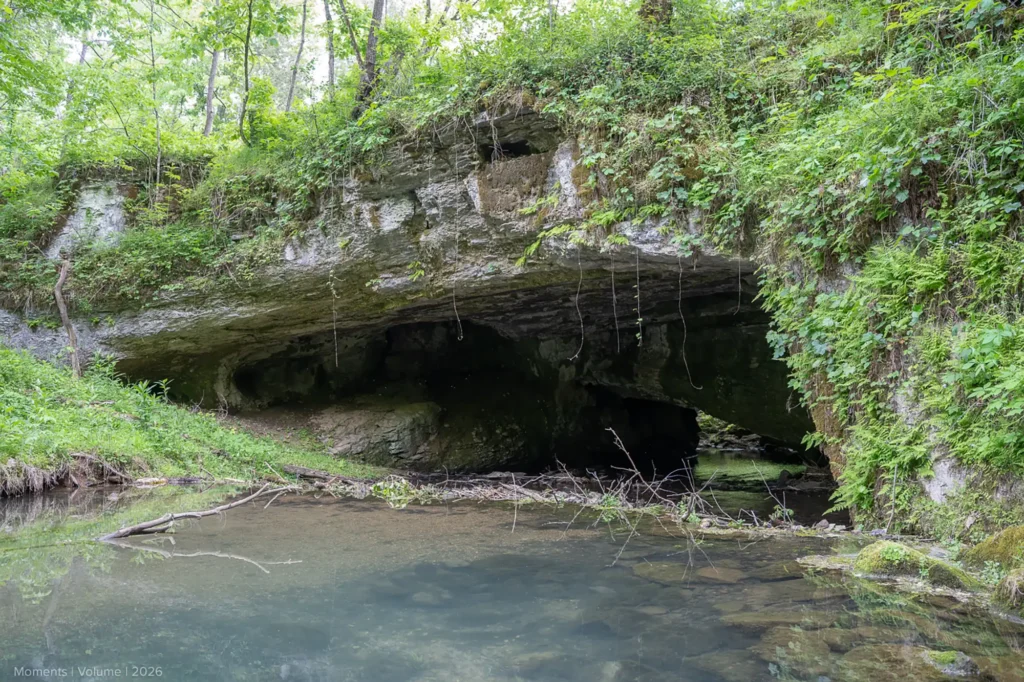
An entry in the journal of Henry Hamilton identifies this segment of the Daniel Boone Wilderness Trail with its description of this natural formation. The Trail and the current road you are traveling on pass over the creek making use of a natural limestone bridge.
With the outbreak of the American Revolution, Britain opened up Ontario as a receiving ground for loyalist Americans who had become refugees in that conflict. Henry Hamilton was made Governor of Upper Canada, which included present Ontario and the land between the Mississippi and Ohio Rivers. Hamilton set up his headquarters in Detroit. Here he followed British war policy and incited the Indians to raid the American frontier. He traded goods for American scalps. Among the goods inventoried at the fort at Detroit in 1778 were “150 dozen scalping knives”. In June that year Hamilton made a speech to the assembled Indians and congratulated them on the “great number of scalps” they had taken. Most of these had come from people who had passed along this Trail into Kentucky. Warming to his task, he further remarked, “King George wanted them to kill all the Long Knives (Americans).” Chief Half King of the Delaware was incredulous, and asked, “Father, only men in arms – not women and children?” To this Hamilton shouted, “All, all, kill all! Nits make lice!” Thus passed into the American experience the ugly battle cry the settlers later used against the Indians themselves.
Kentucky was part of Virginia at this time, and the situation there was intolerable. The Virginia Militia authorized the George Rogers Clark expedition of 1777-78, which conquered the Old Northwest Territory and captured “Hair Buyer” Hamilton and his garrison at Vincennes, Indiana in the process. Hamilton was sent eastward along the Boone Wilderness Trail to the authorities in Williamsburg with the expectation that he would be executed. Clark dispatched a militia unit to escort Hamilton to Williamsburg. Its mission was more to protect Hamilton from the enraged settlers than to keep him from escaping. Hamilton kept a journal on this trip, and it is from it that we have learned of many of the events and places described in this brochure. Once in Williamsburg, after a period of time in jail, he was exchanged for an American officer who was in British hands. This so outraged the Kentuckians, that it was one of the root causes of their forming a separate State.